3PL Fulfillment Services for Skincare
Skincare fulfillment involves more than moving products from a warehouse to a customer. Brands may carry liquids, creams, oils, serums, masks, and treatment products in bottles, jars, tubes, pumps, and other packaging formats, each with different storage and packing considerations.
Product lines can also expand quickly across formulas, sizes, scents, sets, and seasonal collections. Managing these stock keeping units (SKUs) requires accurate inventory records and warehouse processes that help prevent products from being mixed up, damaged, or shipped incorrectly.
A third-party logistics (3PL) provider can handle warehousing, inventory management, pick and pack, shipping, kitting, and returns on behalf of skincare businesses. Speed Commerce supports retailers, manufacturers, and eCommerce brands with fulfillment services that can adapt as product catalogs, sales channels, and order volumes change.
Looking for a better fulfillment solution?
A fulfillment expert will get back to you within 1-2 business days.
Table of Contents
- What Is Skincare Fulfillment?
- Skincare Products and Fulfillment Requirements
- How the Fulfillment Process Works
- Benefits of Outsourcing Fulfillment to a 3PL
- How Speed Commerce Supports Skincare Brands
- Managing Lot Numbers and Expiration Dates
- Kitting, Bundling, and Promotional Sets
- Fulfillment Across Multiple Sales Channels
- What Affects Fulfillment Costs
- What to Look for in a Skincare 3PL
- Learn More About Skincare Fulfillment
- Support Your Skincare Fulfillment With Speed Commerce
What Is Skincare Fulfillment?
Skincare fulfillment covers the operational steps required to store products, process orders, prepare shipments, and manage returns. It begins when inventory arrives at the fulfillment center and continues through receiving, storage, order processing, packing, shipping, and inventory management.
The process can become more involved when a catalog includes products with similar packaging, multiple sizes, fragile containers, liquids, promotional sets, or lot and expiration information. Clear product identification and consistent warehouse procedures help keep those items organized throughout fulfillment.
Outsourcing these functions to a 3PL allows skincare businesses to use established warehousing and shipping infrastructure instead of managing every logistics function internally.
Skincare Products and Fulfillment Requirements
Skincare products vary considerably in formula, packaging, dimensions, and handling needs. Fulfillment procedures should account for those differences rather than treating every item the same way, particularly when product handling and packaging requirements vary across the product line.
Cleansers, Toners, and Facial Mists
Liquid products are frequently packaged in bottles, pumps, or spray containers. Packing procedures should help limit movement and protect closures so products are less likely to leak or become damaged during shipping.
Serums, Oils, and Treatments
Serums, facial oils, and concentrated treatments may come in small bottles, droppers, or glass containers. Protective packing materials can help reduce breakage and keep individual units secure inside the shipping carton.
Moisturizers, Creams, and Balms
Creams, moisturizers, eye treatments, and balms can come in jars, tubes, pumps, and other packaging formats. Accurate SKU identification becomes particularly useful when several products have similar labels, containers, or outer packaging.
Masks, Patches, and Single-Use Products
Sheet masks, eye patches, treatment masks, and other individually packaged products may be sold separately or in multipacks. Inventory records should distinguish between individual units, packs, and case quantities to support accurate order processing.
Skincare Sets and Gift Collections
Products can also be combined into starter kits, travel sets, gift boxes, promotional collections, or subscription packages. Kitting procedures allow individual items to be assembled into a single sellable set while maintaining visibility into the components used.
How the Fulfillment Process Works
Skincare inventory moves through several warehouse stages before reaching the customer. Each stage helps keep products organized, orders accurate, and inventory records current as items move through the fulfillment process.
Stage 1: Receiving
Incoming products are counted, checked, and entered into the inventory system before being placed into storage. Packaging condition, quantities, and product identifiers can also be reviewed during this stage. Any discrepancies can then be documented before inventory is made available for orders.
Stage 2: Storage
Products are assigned warehouse locations based on their size, packaging, handling needs, and order activity. Similar-looking items can be separated or clearly labeled to reduce picking mistakes. Storage locations can also be organized to make frequently ordered products easier to access.
Stage 3: Order Processing
Orders from connected sales channels are sent to the fulfillment operation and prepared for picking. Order details are reviewed so the correct products, quantities, and shipping requirements are assigned. This stage helps move customer orders from the sales platform into the warehouse workflow.
Stage 4: Picking
Warehouse staff locate the correct products, quantities, sizes, and variants required for each order. Barcode scanning or other verification methods can help confirm that the right items are selected. Extra attention can be useful when several skincare products have similar names or packaging.
Stage 5: Packing
Products are packed according to their container type, fragility, order size, and shipping requirements. Glass containers, pumps, droppers, and liquid products may need added protection or different packing materials. Inserts, samples, or branded packaging can also be included when required.
Stage 6: Shipping
Completed orders are prepared for the selected carrier and delivery service before leaving the fulfillment center. Shipping labels and tracking information are generated based on the order details. Once the shipment is handed off to the carrier, tracking updates can be shared with the sales channel or customer.
Stage 7: Inventory Updates
Stock quantities are updated as products are received, shipped, returned, or used in kits and bundles. These updates help businesses maintain a more accurate view of available inventory across their catalog. Current inventory data can also support replenishment planning and upcoming promotions.
A defined process helps keep inventory movement documented from receiving through shipment. It also gives businesses better visibility into stock activity and makes it easier to manage changes in order volume or product assortment.
Get Started Today
Let’s GoBenefits of Outsourcing Fulfillment to a 3PL
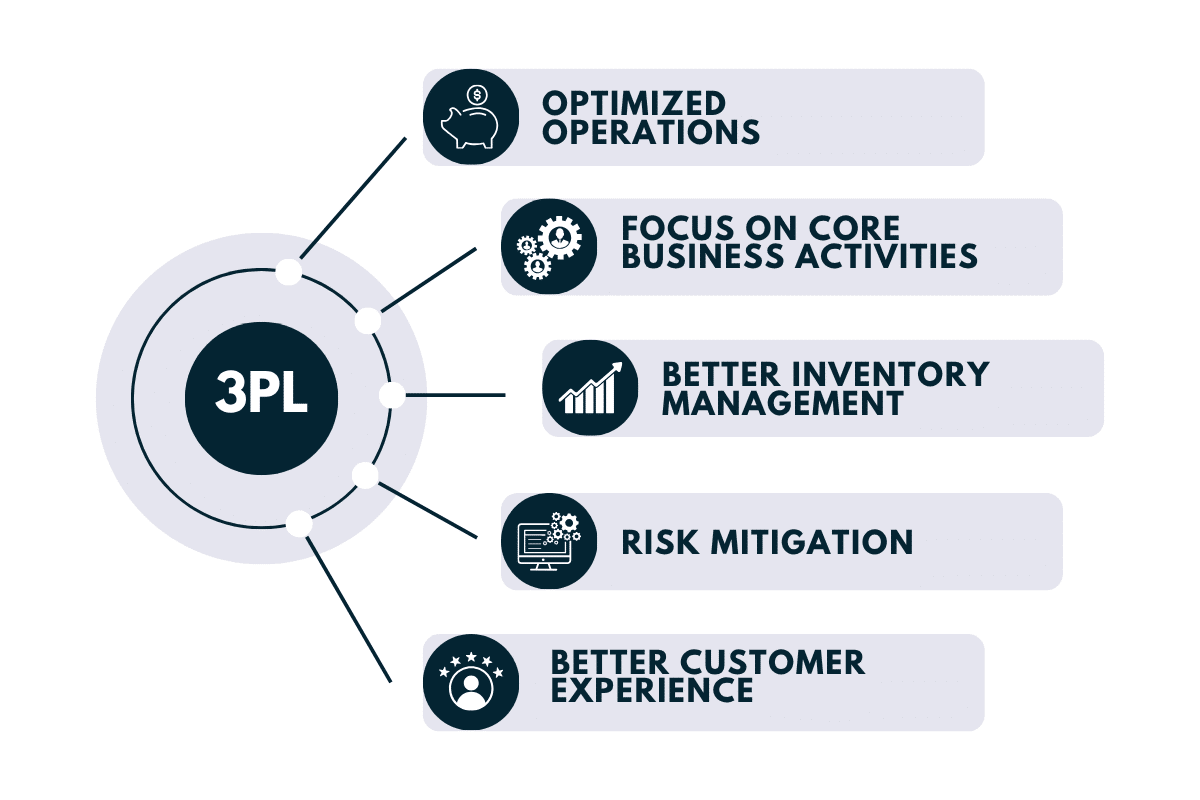
Managing skincare fulfillment internally can require warehouse space, labor, inventory systems, packaging materials, shipping coordination, and ongoing operational oversight. Working with a third-party logistics (3PL) provider can shift these responsibilities to an established fulfillment operation while giving businesses more flexibility as order volume and inventory needs change.
- Established warehouse processes can help make day-to-day fulfillment operations more organized and consistent.
- Moving logistics responsibilities to a 3PL allows internal teams to spend more time on product development, merchandising, marketing, sales, and customer relationships.
- Inventory management systems can provide greater visibility into stock levels, product movement, and replenishment needs.
- Defined receiving, picking, packing, and shipping procedures can help reduce operational risks related to inventory errors, damaged products, and incorrect orders.
- Accurate fulfillment and dependable shipping can contribute to a better customer experience throughout the order process.
For skincare businesses with growing product catalogs or changing order volumes, outsourcing fulfillment can reduce the need to expand warehouse space, staffing, and logistics systems internally. A 3PL can provide the infrastructure and operational support needed as fulfillment requirements become more demanding.
How Speed Commerce Supports Skincare Brands
Skincare businesses can require support across several parts of the fulfillment operation, from managing inventory to processing orders from different sales channels. Speed Commerce brings these functions together so brands can manage fulfillment through one logistics partner as their product assortment and distribution needs change.
Order Fulfillment
Speed Commerce can manage receiving, storage, picking, packing, and shipping for skincare orders. Fulfillment procedures can account for different product sizes, packaging formats, and handling requirements across a brand’s catalog.
Omnichannel Fulfillment
Orders may come from eCommerce stores, marketplaces, retail partners, and other sales channels. A connected fulfillment operation can help coordinate orders and inventory across these channels while supporting different shipping and processing requirements.
Inventory Management
Inventory tracking provides visibility into stock quantities and product movement. This can be especially useful for skincare brands carrying similar products across different formulas, sizes, packaging styles, or collections.
Returns Management
Returned products can be inspected and processed according to the brand’s established return criteria. Inventory records can then be updated based on the condition of the returned item and the appropriate next step.
Tailored Fulfillment Support
Skincare brands may also need services such as kitting, gift set assembly, samples, promotional inserts, special packaging, or support for product launches. Speed Commerce can incorporate these requirements into the fulfillment operation based on the brand’s products and order needs.
Managing Lot Numbers and Expiration Dates
Some skincare products use lot numbers, expiration dates, or other identifiers to support inventory traceability. When these details apply, the fulfillment process should preserve them as inventory moves through receiving, storage, and order processing.
Lot-level tracking can help businesses determine which inventory was received or shipped as part of a particular production batch. Date information can also support inventory rotation so older eligible stock is considered before newer inventory when appropriate.
Businesses should discuss these requirements with a prospective 3PL before onboarding. The warehouse system and operating procedures need to match the level of tracking required for the products being fulfilled.
Kitting, Bundling, and Promotional Sets
Skincare products are frequently marketed together rather than only as individual units. A cleanser, serum, and moisturizer might be sold as a routine, while smaller products may be grouped into discovery kits, travel sets, or seasonal gift collections.
Kitting allows these individual products to be assembled into a new sellable configuration before an order ships. Businesses can also incorporate samples, inserts, promotional materials, or branded packaging into selected orders.
Defined assembly instructions help maintain consistency across each finished kit. Component tracking also helps businesses see how many individual units remain available after products have been allocated to bundled sets.
Fulfillment Across Multiple Sales Channels
Skincare businesses may receive orders through their own eCommerce stores, online marketplaces, retail partners, wholesale accounts, and other sales channels. Each channel can have different order quantities, packaging instructions, shipping methods, or labeling requirements.
Centralizing fulfillment can make it easier to manage inventory when several channels draw from the same stock. Order and inventory information can move between sales platforms and the warehouse so businesses have a clearer view of available products and outgoing orders.
Retail and wholesale fulfillment may also involve larger quantities or different carton and labeling requirements than direct-to-consumer shipments. A 3PL that can work with different order types gives businesses more flexibility as their distribution model expands.
What Affects Fulfillment Costs
Skincare fulfillment pricing depends on the work required to receive, store, process, pack, and ship the products. Costs can also vary based on factors such as order volume, packaging requirements, inventory levels, product dimensions, and any kitting or special handling involved.
| Cost Factor | How It Can Affect Pricing |
|---|---|
| Receiving | Inventory counts, sorting, labeling, and inbound shipment format can affect receiving work. |
| Storage | Costs can vary based on the space and storage locations inventory occupies. |
| Order Volume | The number of orders processed each month affects warehouse labor requirements. |
| Units per Order | Orders containing several products require more picking activity. |
| Packaging | Glass, liquids, gift boxes, and fragile products may require different packing materials. |
| Kitting | Product sets, subscription boxes, and promotional bundles require assembly work. |
| Shipping | Package dimensions, weight, destination, carrier, and service level affect transportation costs. |
| Special Projects | Relabeling, inserts, samples, promotional preparation, and other projects may involve separate labor. |
| Returns | Inspection, processing, and inventory updates can contribute to fulfillment expenses. |
Businesses can get a more useful estimate by providing a prospective 3PL with information about monthly order volume, product dimensions, inventory levels, average units per order, packaging requirements, sales channels, and expected promotional activity.
What to Look for in a Skincare 3PL
Choosing a 3PL involves more than comparing warehouse and shipping rates. Businesses should consider whether the provider’s systems and operating procedures align with the products being sold.
Product Handling Capabilities
The fulfillment operation should be able to accommodate liquids, pumps, tubes, jars, glass containers, and other packaging formats found across a skincare catalog.
Inventory Visibility
Businesses should be able to monitor stock quantities and order activity. Lot or expiration information should also be supported when those details are part of the business’s inventory requirements.
Kitting Capabilities
A provider that can assemble product sets, promotional bundles, samples, or subscription packages can reduce the need to coordinate those projects separately.
Multi-Channel Support
The 3PL should be able to process the types of orders the business receives, whether they come from a direct-to-consumer store, marketplace, retailer, or wholesale customer.
Flexible Capacity
Product launches, promotional campaigns, holiday gifting, and other events can change order volume. Warehouse operations should be able to accommodate those changes without requiring the brand to build its own extra infrastructure.
Clear Pricing and Communication
Businesses should know how receiving, storage, picking, packing, shipping, kitting, returns, and special projects are billed. Clear communication also makes it easier to plan upcoming launches, inventory arrivals, and promotional activity.
Learn More About Skincare Fulfillment
Skincare fulfillment requirements vary depending on the products, packaging formats, sales channels, and order volume. These common questions cover several areas businesses may want to discuss when evaluating a 3PL.
Can a 3PL Fulfill Skincare Products Packaged in Glass?
Yes. Glass bottles, jars, and droppers can be handled using packaging procedures designed to reduce movement and protect the product during transit. The appropriate materials and carton configuration depend on the dimensions, weight, and fragility of the item.
Can Skincare Products Be Assembled Into Kits?
Yes. Individual products can be grouped into skincare routines, starter sets, travel kits, gift boxes, promotional bundles, and subscription packages. Kitting procedures can also incorporate samples, inserts, and branded materials when required.
Can a 3PL Track Lot Numbers?
Lot tracking can be supported when the warehouse systems and processes are configured for that requirement. Businesses should discuss the level of lot visibility they need before inventory is received so the appropriate procedures can be established.
How Are Liquid Skincare Products Packed for Shipping?
Liquid products can be packed according to their container type, closure, size, and shipping configuration. Protective materials and suitable carton sizing can help limit movement and reduce the chance of bottles, pumps, or caps becoming damaged during transit.
Can a 3PL Handle Skincare Product Launches and Promotions?
Yes. A 3PL can support increased order activity, promotional kits, samples, inserts, and other launch- and campaign-related fulfillment tasks. Planning inventory arrivals and project requirements can help the warehouse prepare for the expected workload.
Choose Speed Commerce for Skincare Fulfillment
Let’s GoSupport Your Skincare Fulfillment With Speed Commerce
A growing skincare business needs fulfillment processes that can keep pace with new products, expanding sales channels, promotional campaigns, and changing order volumes. Speed Commerce provides warehousing, inventory management, pick and pack, kitting, shipping, and returns support for businesses looking to move fulfillment outside their internal operations.
With the right logistics setup in place, skincare brands can spend less time managing warehouse tasks and more time focusing on their products and customers.

Insights

15 Great Customer Service Blogs
Ecommerce retailers can set themselves apart and gain loyalty with excellent customer service. But remember that today’s customers have much easier access to competitors, ratings, and reviews these days, so you need to respond more quickly and effectively than ever before. So we’ve compiled a list of our favorite customer-centric blogs that focus on tips,…
Read More

Free Shipping Drives Customer Recommendations
UPS’ 2013 Pulse of the Online Shopper study was recently released for download, offering valuable insight for ecommerce retailers into consumers’ attitudes on shipping, delivery, and the entire operations process. This study asked over 3,000 ecommerce consumers about everything from reasons why they abandon their carts to what they expect when they click ‘buy’ to…
Read More

What We Learned From the Thanksgiving Holiday
Thanksgiving weekend has come and gone, and analysts have crunched the numbers to understand how much was spent, where it was spent, and who made more significant profits. It’s also essential to look at other trends from that weekend to understand how consumers shop and what is pushing them toward a purchase. With a few…
Read More