
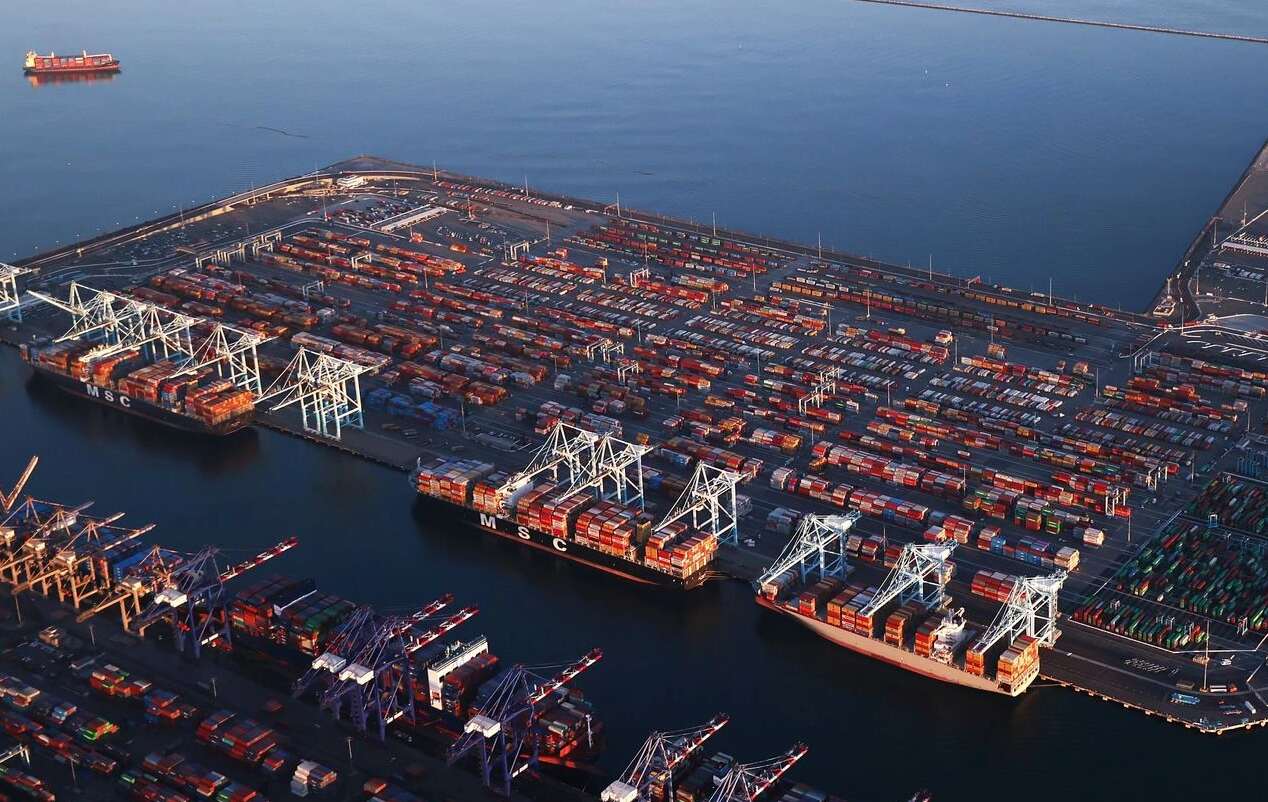
Los Angeles just had its busiest month ever. For importers still bracing for another port logjam, there’s a welcome twist: the latest terminal snapshot shows far fewer aging containers than in October 2021.
As of October 27, 2026, that makes the gateway worth a fresh look. The planning issues are specific: getting rail cargo moving, preparing for the Vincent Thomas Bridge closure, and matching arrivals with a warehouse ready to receive them.
September set a cargo record
According to the Port of Los Angeles, September 2026 was its busiest month on record, with 1,042,652 twenty-foot equivalent units, or TEUs, moving through the port. The July-through-September quarter also set a record at nearly 3 million TEUs.
The port’s container statistics put September’s total 18.07% above September 2025. Loaded imports reached roughly 545,696 TEUs, up 18.62%, while loaded exports rose 9.64%. Through the first nine months of 2026, total volume was up 3.38%.
TEUs measure container capacity: a standard 40-foot container represents two TEUs. The headline total also includes empty containers, so it should not be described as a million boxes of imported merchandise.
The strength has several drivers. In his October 9 briefing, Port Executive Director Gene Seroka pointed to resilient consumer spending, inventory replenishment, lower tariffs than earlier in the year, and routing challenges involving the Suez and Panama canals.
The practical takeaway is that Los Angeles is handling substantial demand. Lower congestion cannot simply be explained by a lack of business.
The terminal backlog is smaller than the old pictures suggest
Cargo volume measures how much moves through the port over a period. Terminal inventory measures how much is sitting there at a particular moment. Looking at both gives a more useful picture of traffic.
The Port of Los Angeles’ October 26 Import Container Dwell Report counted 52,640 import containers on its terminals. It reported total import inventory 45% below October 24, 2021, and the number sitting for nine days or longer 66% below that same date.
That is an encouraging comparison alongside record monthly throughput. It suggests the port can accommodate heavy activity with substantially less accumulated inventory than at that point in the pandemic disruption.
There is still work to do. The October 26 snapshot included 12,590 containers that had been on terminal for at least nine days, or 23.9% of the total. A better overall picture can coexist with a costly delay for an individual importer.
Rail remains the pressure point
The Pacific Merchant Shipping Association’s September report shows where the strain is building:
| Outbound mode for import containers | August 2026 dwell | September 2026 dwell |
|---|---|---|
| Local truck | 2.95 days | 3.18 days |
| Rail | 6.75 days | 7.19 days |
These figures cover Los Angeles and Long Beach together. They measure containers’ time on marine terminals. Truck dwell is not a driver’s gate visit, and rail dwell is not the complete journey to an inland warehouse.
The association identified rail as the area under the greatest pressure during the extended peak season.
Los Angeles’ separate October 26 on-dock rail report adds a useful inventory check: 8,133 of 19,626 containers awaiting loading had been there for nine days or longer. That is about 41%.
For a brand replenishing an inland fulfillment center, vessel arrival is only one milestone. The rail handoff may determine when the stock can actually become available to sell.
Rail capacity and shipment visibility support planning
The port has added infrastructure since the pandemic. Its $73 million Pier 400 on-dock rail expansion, completed in July 2024, added 31,000 linear feet of track and five railroad storage tracks. That provides additional rail capacity, even though today’s dwell figures show that capacity still needs careful coordination.
Shippers also have more useful operating information than a monthly cargo headline can provide. The port’s Cargo Operations Dashboard publishes reports on import dwell, rail containers awaiting loading, trucking appointments, and vessel activity. Its Signal tool provides projected container arrivals.
For a Los Angeles warehouse, those tools can help the receiving team see an inbound surge early and prepare labor, dock appointments, and storage. Their value depends on someone acting on the information. A visible delay can still disrupt a promotion if the inventory plan assumes the container has already reached the warehouse.
Road traffic needs a separate plan
The most immediate local change is on the road network. Caltrans confirmed on October 22 that the Vincent Thomas Bridge will close for 16 months beginning November 7, 2026, at 12:01 a.m. The bridge is targeted to reopen in early March 2028.
Caltrans identifies primary detours using Interstates 710 and 110, State Route 103, and Harry Bridges Boulevard. It is also preparing traffic controls and other measures to manage the closure.
The bridge closure affects a road connection serving the harbor. It does not close the container terminals. Its practical effect on a shipment will depend on the terminal, the trucker’s route, and the receiving location.
Before a November pickup, ask your drayage provider or shipping company in California whether the quoted route uses the bridge, how the detour changes the appointment plan, and whether any additional time or cost is included. Check current Caltrans advisories as the move approaches.
Keep that project separate from the port’s SR 47 interchange improvements at Harbor Boulevard and Front Street. They involve nearby infrastructure, but they are different projects with different traffic notices.
Plan all the way to available inventory
A stronger port performance creates an opportunity to make better inbound decisions. It does not eliminate the need to connect ocean transport with the rest of the fulfillment operation.
Start with the destination. If you’re evaluating a fulfillment warehouse in Los Angeles, compare the complete route from the supplier through that facility to your customers. Another gateway or warehouse location may offer a better result for a particular origin, inland destination, or service requirement. Include inland transportation, handling, inventory costs, and the time until goods are ready for orders.
For each important inbound shipment, confirm four things:
- The container’s actual status. Track discharge, customs and carrier releases, availability, and any holds. A vessel arrival date alone does not establish pickup readiness.
- The next movement. Confirm the truck appointment or rail loading plan, equipment, and the responsible provider. For road moves, include the current detour.
- The receiving appointment. Make sure the warehouse can accept the shipment when it arrives, with labor and space for unloading, checking, and putting away stock.
- The date inventory can support orders. Account for receiving and any required labeling, kitting, or retail preparation before attaching the shipment to a promotion or replenishment promise.
Set an escalation point for aging containers, too. Use the free-time terms and shipment status that actually apply to the move. A port average is a poor substitute for knowing when your own container needs action.
A stronger gateway still needs a receiving plan
The Port of Los Angeles deserves a more current reputation than its pandemic photographs allow. Record volume and a substantially smaller stock of older containers show why an importer should give it a fresh assessment.
The remaining risks are specific enough to plan around: rail loading, the approaching bridge closure, and the handoff into a warehouse that can receive and process the goods.
Speed Commerce can help brands plan inbound receiving and order fulfillment around when inventory will actually be available. Bring the shipment schedule, customer destinations, and receiving requirements into that conversation so a better port experience carries through to the customer.
References
- Port of Los Angeles. “Port of Los Angeles Sets All-Time Monthly Cargo Record.” October 9, 2026.
- Port of Los Angeles. “Container Statistics,” September 2026 and calendar year-to-date figures. Accessed October 27, 2026.
- Port of Los Angeles. “Import Container Dwell Report.” October 26, 2026.
- Pacific Merchant Shipping Association. “San Pedro Bay Ports Container Dwell Times for September 2026.” October 15, 2026.
- Port of Los Angeles. “Import On-Dock Rail Awaiting Loading.” October 26, 2026.
- Port of Los Angeles. “Port of Los Angeles Completes $73 Million On-Dock Rail Expansion Project on Pier 400.” July 10, 2024.
- Port of Los Angeles. “Cargo Operations Dashboard.” Accessed October 27, 2026.
- Caltrans District 7. “16-Month Closure of Vincent Thomas Bridge Set for Nov. 7.” October 22, 2026.
- Port of Los Angeles. “SR 47 Interchange Project.” Accessed October 27, 2026.