
Auto Parts Fulfillment: The Full Cycle From Warehouse to Wheels
Auto parts fulfillment is the process of moving vehicle components from warehouses to end users through a precisely timed sequence of operations. The better managed it is, the more successful the distributor or manufacturer becomes.
For instance, when a car breaks down or needs maintenance, the speed and accuracy of parts delivery directly impact how quickly that vehicle returns to service. For repair shops, efficient parts fulfillment means less downtime in service bays. And for fleet operators, it’s the difference between vehicles generating revenue on the road or sitting idle.
Looking for a better auto parts fulfillment solution?
A fulfillment expert will get back to you within 1-2 business days.
Global Automotive Industry Overview
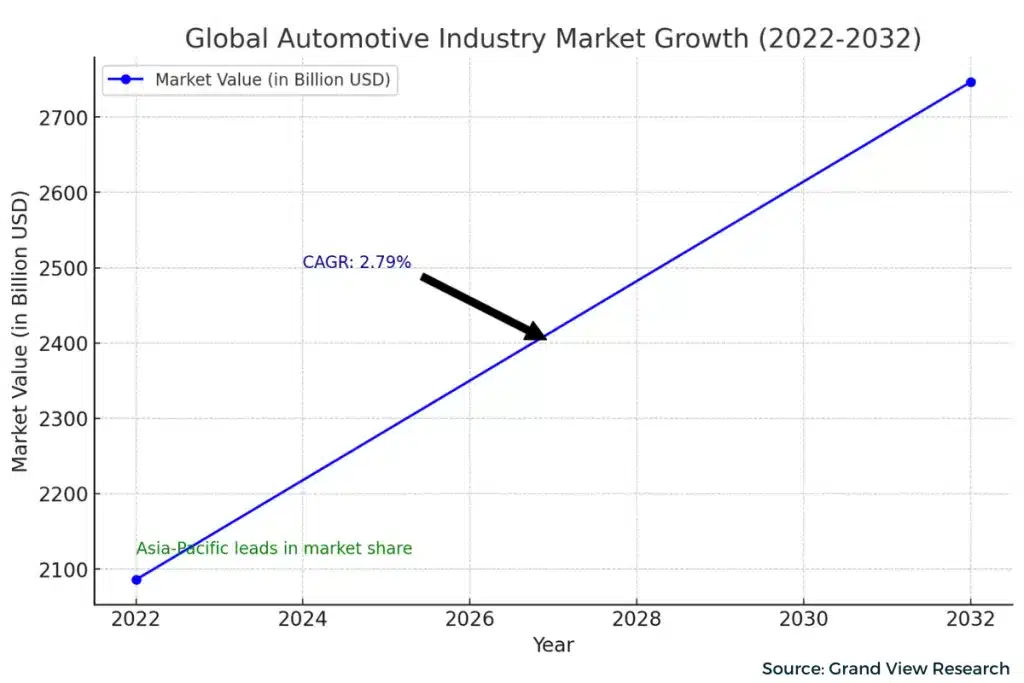
In 2022, the global automotive industry market was valued at USD 2,085.78 billion and is projected to reach USD 2,746.49 billion by 2032, at a compound annual growth rate (CAGR) of 2.79%. Asia-Pacific currently leads in market share.
The industry comprises various sectors such as vehicle manufacturing, parts production, design, and marketing, as well as the sale of motor vehicles. Vehicles are broadly categorized into two: commercial and passenger vehicles.
Initially, vehicles were assembled manually. But after advancements in automation during the 1960s transformed and sped up production processes.
Today, innovations such as Advanced Driver Assistance Systems (ADAS) and the surge in electric vehicle (EV) adoption have reshaped the industry landscape. The increased per capita income in many regions is also boosting demand, as consumers prioritize convenience and comfort. This trend is especially visible in developing nations, where more people can now afford personal vehicles.
Main Segments of the Auto Parts Industry:
- Original Equipment Manufacturers (OEMs) – Supply parts directly to automakers for use in new vehicles.
- Aftermarket – Caters to the replacement market. They provide parts for vehicle repairs and maintenance.
- Electric Vehicle (EV) Components – As the EV industry surges, demand for components like batteries, electric motors, and power electronics is on the rise.
The Latest News in Auto Parts eCommerce & Logistics 2025
February
- President Donald Trump has signed a proclamation increasing tariffs on steel and aluminum imports to 25%, removing previous exemptions under Section 232 of the Trade Expansion Act. This action is expected to raise vehicle parts costs, potentially leading to higher prices for consumers on vehicles and repairs.
Reference: “Steel and aluminum tariffs could increase auto parts costs” (https://www.sfgate.com/local/article/auto-parts-chain-bay-area-locations-close-hundreds-19917313.php)
April
- President Donald Trump has announced a 25% tariff on all foreign-made cars, effective April 2, 2025, aiming to boost domestic manufacturing. This move is expected to impact approximately half of the vehicles sold in the U.S., potentially generating $100 billion annually but also raising concerns about increased consumer costs and potential retaliatory measures from trading partners.President Donald Trump has announced a 25% tariff on all foreign-made cars, effective April 2, 2025, aiming to boost domestic manufacturing. This move is expected to impact approximately half of the vehicles sold in the U.S., potentially generating $100 billion annually but also raising concerns about increased consumer costs and potential retaliatory measures from trading partners.
Reference: “When do auto tariffs take effect? Trump’s 25% fee on imported vehicles, parts coming this week” (https://www.usatoday.com/story/money/cars/2025/03/31/when-auto-tariffs-trump-2025/82739633007/)
Better Fulfillment = Better Bottom Line
request a quoteDriving Growth Factors
The automotive industry’s expansion is being propelled by the following:
Rapid Adoption of Electric Vehicles (EVs)
The demand for electric vehicles (EVs) is rising rapidly as more consumers and industries shift toward eco-friendly alternatives. Unlike traditional vehicles, EVs operate on electric motors that use rechargeable batteries. Various battery types support this energy source, including:
- Nickel-based batteries
- Lithium-ion batteries
- Molten salt batteries
- Zinc-air designs
The increasing preference for EVs is largely driven by their environmental benefits; they produce fewer emissions and thus help reduce air pollution. In addition, EVs enhance fuel efficiency, lower maintenance costs, ease home charging options, smoothen driving experiences, and reduce engine noise.
EVs come in multiple forms:

| Meaning | |
|---|---|
| Battery Electric Vehicles | Battery Electric Vehicles (BEVs) operate entirely on electricity stored in batteries. They rely solely on electric motors powered by rechargeable lithium-ion (or sometimes other chemistries like solid-state) battery packs. |
| Hybrids | Hybrid Electric Vehicles (HEVs) combine a traditional internal combustion engine (ICE) with an electric motor and battery to enhance fuel efficiency and reduce emissions. HEVs don’t need to be plugged in; instead, they generate and store electricity through regenerative braking and the engine itself. |
| Plug-in Hybrids | Unlike conventional hybrids, Plug-in Hybrid Electric Vehicles (PHEVs) can be plugged into an external power source to recharge, allowing them to operate solely on electric power for longer distances. |
Rising Popularity of Autonomous Vehicles
Autonomous, or driverless, vehicles can sense and interpret their surroundings, allowing them to operate with minimal human intervention. With technologies like light detection and ranging (LiDAR), artificial intelligence (AI), radio detection and ranging (RADAR), and high-definition cameras, autonomous vehicles create dynamic 3D maps of their environment for safe navigation.
The degrees of autonomy are as follows:
- Level 0: No automation – the driver is fully responsible.
- Level 1: Driver Assistance – one function, either steering or acceleration, is automated. (e.g. Adaptive cruise control or lane-keeping assist)
- Level 2: Partial Automation – both steering and acceleration are automated, but the driver must supervise. (e.g. Tesla’s Autopilot, General Motors’ Super Cruise, and Ford’s BlueCruise)
- Level 3: Conditional Automation – the vehicle can handle driving in certain conditions, but the driver must be ready to take over. (e.g. Audi models with Traffic Jam Pilot)
- Level 4: High Automation – fully autonomous in specific conditions, but the vehicle may need human assistance outside those areas. (e.g. self-driving taxis and shuttle services like Waymo and Cruise)
- Level 5: Full Automation – fully autonomous in all conditions, with no human involvement required. It remains a future goal, with no vehicles currently achieving it.
What is Car Accessories and Auto Parts Fulfillment?
Auto Parts fulfillment refers to the complete process of managing and delivering automotive parts from a supplier to the end customer (e.g. mechanic shop, dealership, or individual car owner). It covers every step from receiving an order, storing inventory, and picking and packing the parts, to shipping and handling returns, if necessary.
Auto parts and car accessories to fulfill:
- Engines
- Gears
- Exhausts
- Batteries
- Fuel Injectors
- Spark Plugs
Accelerate Your Parts Delivery Today
request a quoteHow Does Automotive Fulfillment Work?
Here’s a step-by-step breakdown of how automotive fulfillment works:
Step 1. The Warehouse Receives and Stores the Inventory
The fulfillment center receives automotive parts from manufacturers or suppliers. Parts are inspected for quality to ensure they meet standards and are accurately received. The warehouse then organizes parts by size, type, and demand frequency. Warehouses also use inventory management systems to track stock levels in real-time.
Step 2. The Order is Processed and Verified
When a customer or client places an order, the order processing system verifies order details and checks inventory availability. Orders are then routed to the nearest fulfillment center with available stock.
Step 3. The Warehouse Team Picks and Packs the Parts
As soon as the order is confirmed, the auto parts are then prepared for shipping. Warehouse staff pick and pack the products using automated picking systems or generated pick lists, attach labels, and prepare the documents (e.g. invoices or packing slips). Large or fragile parts like car accessories and parts generally receive extra handling.
Step 4. The Orders are Shipped and Tracked
The appropriate shipping method is selected based on the customer’s chosen delivery option. Below are the common shipping options for auto parts and accessories:
- Standard Ground Shipping – Best for small to medium-sized car accessories and parts, like filters, spark plugs, wiper blades, and mirrors. Standard ground shipping is affordable, widely accessible, and offers reliable tracking. It is also ideal for non-urgent parts and accessories.
- Expedited Shipping – Best for urgent orders, smaller parts needed quickly, and high-value items like electronic components or custom accessories. Its faster delivery times help reduce vehicle downtime. Although it’s more expensive, it’s worth it for critical parts needed for immediate repairs.
- Freight Shipping – Best for large, bulky, or heavy car parts like engines, transmissions, bumpers, and more. Freight carriers can handle oversized items with specialized equipment and packaging. Some carriers offer liftgate delivery for residential locations.
- White Glove Delivery – Best for fragile or expensive items, such as glass components. White glove delivery includes specialized handling, packaging, and often unpacking and placement at the delivery location. This service is typically arranged with freight carriers that offer white glove options or with specialized logistics providers.
Tracking information is also sent to the customer so they can monitor the delivery progress. The order is then delivered, and confirmation of delivery completes the fulfillment process.
Step 5. The Fulfillment Center Manages Returns and Inspects Parts
If a customer needs to return an item, the fulfillment center manages the process. Returned parts are inspected for condition and, if undamaged, are restocked. If defective, these are disposed of properly. This is when a skilled designated contact center becomes invaluable.

What Types of Companies Require an Auto Parts Fulfillment Warehouse?
Auto parts fulfillment warehouses serve various companies in the automotive industry, both B2B and B2C. Companies such as auto parts retailers, eCommerce sellers, and aftermarket providers rely on these warehouses to efficiently handle a vast inventory of parts and accessories. For sellers and retailers, it reduces the need for extensive on-site inventory and helps meet high customer expectations for quick shipping.
Manufacturers, Original Equipment Manufacturers (OEMs), and automotive dealerships also benefit significantly from auto parts fulfillment warehouses. By centralizing storage, these companies have steady access to replacement parts as needed.
Rev Up Your Auto Parts Fulfillment Process
request a quote5 Things to Consider for Effective Automotive Fulfillment
Below are the main things to consider when deciding whether or not to invest in an automotive fulfillment service:
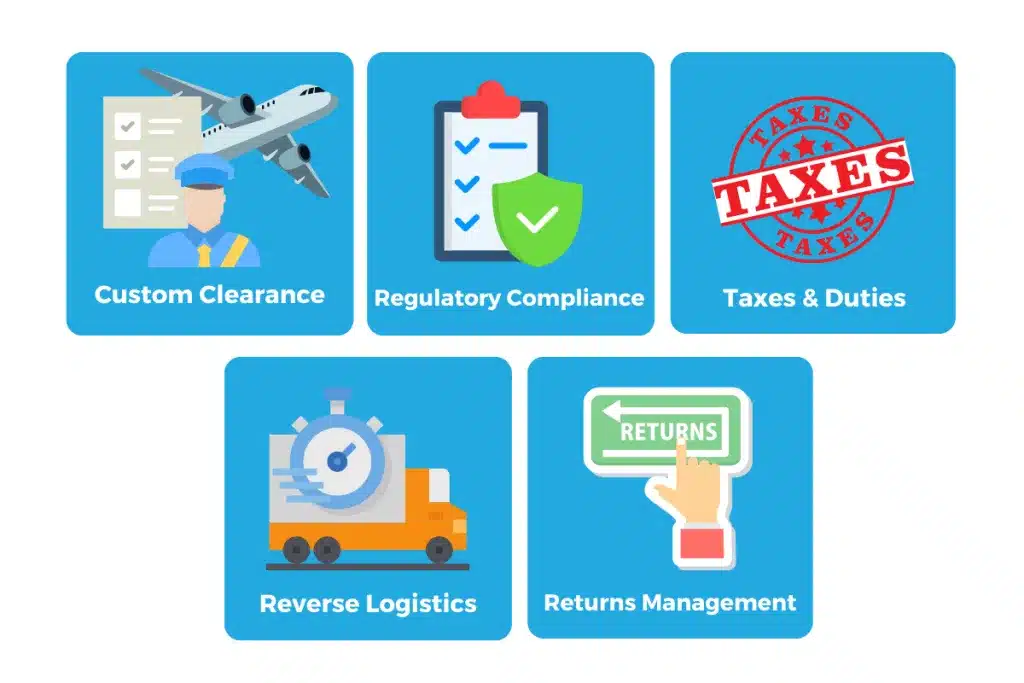
Custom Clearance
Each country has its own customs regulations, and automotive parts are often subject to rigorous inspections and documentation requirements. Customs delays can severely impact delivery times, especially for urgent parts needed by repair shops or end customers.
Thus, businesses will need an automotive fulfillment partner that is experienced in international shipping. This helps ensure that all paperwork is accurate and complete.
Regulatory Compliance
Automotive parts are regulated by stringent safety, environmental, and industry standards, and these regulations vary across countries. Compliance means that the parts meet all necessary safety and environmental standards, which is vital for a business to avoid penalties and ensure customer safety.
Centers handling auto parts need to understand these regulations and follow specific protocols to maintain compliance.
Taxes & Duties
Taxes and duties are import fees imposed by governments, and they vary significantly depending on the destination, type of automotive part, and even the material composition. High import taxes can increase costs for both the business and the customer. So, businesses must learn how to accurately calculate costs.
Shipping Times
Delays can disrupt repair shop operations, frustrate end customers, and damage a company’s reputation. Choosing the right fulfillment partner and shipping method guarantees that parts reach customers as quickly and reliably as possible.
Returns Management
Implementing a clear return policy, including eligibility requirements and documentation, helps streamline the auto parts fulfillment process. A well-organized fulfillment center can inspect returned items, restock sellable parts promptly, and manage defective or incompatible items.
How Can a 3PL Partner Help? Benefits of Outsourcing Automotive Fulfillment
A third-party logistics (3PL) partner can greatly enhance auto parts fulfillment by providing specialized services, advanced technology, and logistical expertise which not all businesses can have.
Below are the different benefits of investing in a 3PL fulfillment warehouse for auto parts:
Optimizing Inventory Levels
Fulfillment centers use advanced inventory management systems to maintain accurate stock levels and forecast demand. Real-time tracking provides businesses with immediate insights into stock levels so they can reorder parts when levels are low.
For example, if a part is selling quickly in one region, real-time data allows for prompt reallocation or restocking.
Not to mention, fulfillment centers often use historical sales data, seasonal trends, and even predictive analytics to forecast demand for different auto parts. This helps businesses stay ahead of the competition.
Cuts Down Long-Term Costs
By reducing excess inventory, businesses save on storage costs and avoid tying up capital in unsold parts. Accurate inventory management also minimizes the risk of stockouts, which can lead to lost sales and dissatisfied customers.
Outsourcing auto parts fulfillment companies avoid the high fixed costs associated with warehouse ownership or long-term leases, as well as expenses like utilities, equipment, and warehouse maintenance.
Accurate Order Fulfillment for Auto Parts
By automating inventory tracking and updating stock levels, WMS and OMS reduce errors associated with manual inventory counts.
When an order is placed, these systems generate accurate picking lists and track orders through each stage which prevent any chances of a staff accidentally picking a similar-looking part.
Also, many order fulfillment centers use barcode and RFID technology to ensure that the correct items are selected by scanning each part’s unique identifier.
Scanning also prevents manual data entry errors, which can be common when handling parts with similar names or SKUs.
Safer Deliveries
Mishandling can lead to damage during picking, packing, or transit.
For example, delicate parts like electronic sensors or glass components are highly susceptible to damage if not handled carefully. Fulfillment providers specializing in automotive parts have trained staff who understand the unique requirements of handling different car components. They use customized packaging solutions like foam padding, bubble wrap, custom-fit boxes, etc.
Proper packaging prevents damage during shipping, especially for fragile or irregularly shaped parts.
Reduces Waste
A 3PL specializing in automotive parts may use custom-fit packaging for specific items like mirrors or brake pads, reducing the need for extra padding materials and oversized boxes. This reduces material waste and lowers shipping costs by keeping packages lightweight and compact. Using eco-friendly or recyclable packaging materials further cuts down on waste.
Make Every Delivery A Promise Kept
check them out3 Challenges of Auto Parts Fulfillment
Below are the different challenges that businesses could encounter with auto parts fulfillment:
Fulfilling Orders Accurately
Automotive parts are often highly specific, with many components tailored to particular makes, models, and years. Even the tiniest details matter as the product picked may end up being incompatible with the vehicle.
This mistake can easily lead to returns, replacement orders, and customer dissatisfaction. This can be costly in terms of both materials and shipping expenses, as well as damaging to customer relationships.
Shipping Oversized Items
Many automotive parts, such as engines, transmissions, bumpers, or windshields, are large, heavy, or oddly shaped. Shipping oversized items is not only costly but also logistically difficult. Freight shipping can involve higher rates, longer delivery times, and increased risk of damage if items are not handled properly.
Managing Inventory and Returns
Auto parts fulfillment involves managing a vast array of SKUs, as each vehicle model may require parts that are not interchangeable. Stocking such a diverse inventory without overstocking or running into stockouts requires advanced inventory management systems and demand forecasting.
Top 3PL Services for Auto Parts Companies
Here are the different services that businesses can get from 3PL auto parts fulfillment companies:
Inventory Management
Inventory management involves tracking, organizing, and controlling stock levels. 3PLs use advanced inventory management systems (IMS) that update stock levels automatically as orders are processed so that businesses have accurate insights into inventory at all times.
Pick and Pack Services
Pick and pack services involve selecting the ordered parts from inventory (picking) and preparing them for shipping by securely packaging and labeling (packing) them for delivery. Tailored packaging is often used to protect fragile or oversized parts.
Workforce Skill & Training
Auto parts 3PLs train their workforce to handle the specific requirements of automotive components. Training covers skills like understanding SKU differentiation, using warehouse technology and handling returns.
Properly trained staff reduce the risk of picking and packing errors. They learn to identify various parts that may look similar but differ in function or compatibility and to handle bulky or fragile parts correctly.
Advanced Technology Integration
3PLs leverage advanced technologies like Warehouse Management Systems (WMS), RFID, automated picking systems, and inventory tracking to optimize fulfillment processes for auto parts. They also integrate these technologies with their clients’ eCommerce platforms (e.g. Shopify) for seamless order processing.
Green Automotive Logistics
Sustainable practices help auto parts companies reduce their carbon footprint, and appeal to eco-conscious customers. By partnering with a 3PL that prioritizes green logistics, auto parts businesses can meet this goal without managing these processes independently. Green logistics can also lead to cost savings over time by reducing fuel and energy consumption.
Examples of green logistics practices include optimized routing, LED lighting, and recyclable packaging.
Who are we? Speed Commerce is an end-to-end provider of outsourced customer experience solutions, including Section 321 fulfillment for retailers (on Shopify and Bigcommerce & more) as well as manufacturers. We grow our clients’ businesses by providing winning customer experience strategies such as 24/7/365 eCommerce customer service, order fulfillment, and warehousing – get a free quote from a fulfillment expert. Read our annual top-ranked 3PLs in the US list.
Automotive Fulfillment & Warehousing Fees
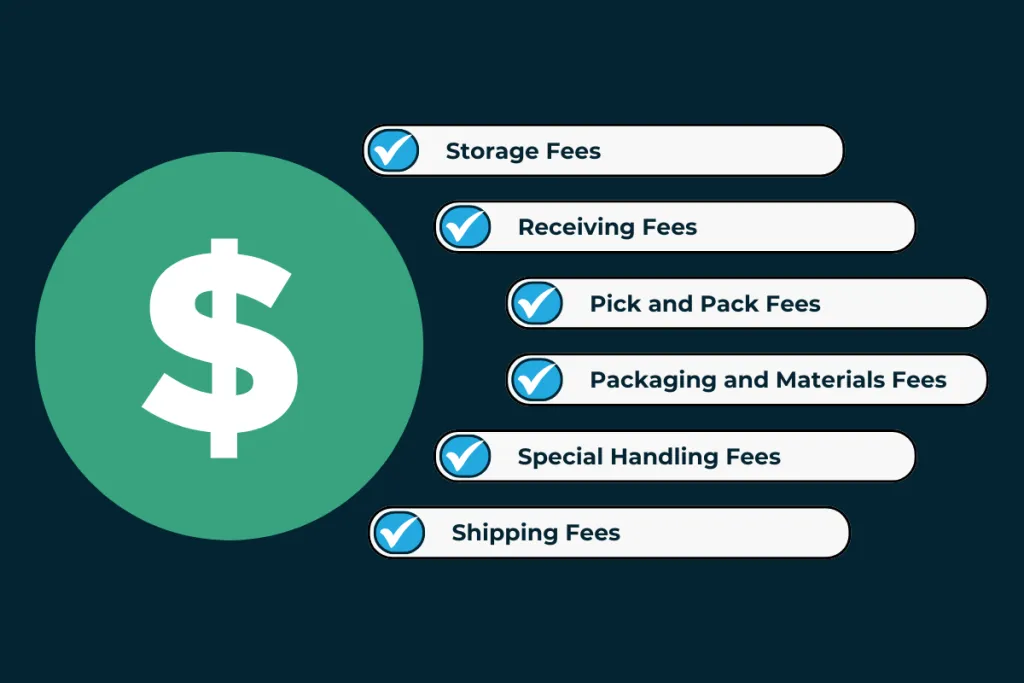
Here’s a breakdown of the primary fees auto parts companies can expect from an auto parts fulfillment center:
Storage Fees
Storage fees are charged for keeping inventory within a 3PL’s warehouse. Fees typically depend on the space occupied and are measured in square footage, pallet positions, or cubic footage.
Fees are usually assessed on a monthly basis, though some 3PLs may charge daily or weekly rates for more flexibility. Rates may vary based on the type of item and size.
Receiving Fees
Receiving fees cover the cost of unloading inventory when it arrives at the warehouse. They’re usually charged per hour, per pallet, or unit, depending on the type of items.
For example, if a shipment of brake pads arrives, the 3PL might charge a per-pallet rate for unloading and inspecting. If each item needs to be barcoded and entered individually, a per-item fee could be charged instead. For large deliveries, an hourly rate may be applied, especially if special handling or extra staff are required.
Pick and Pack Fees
Pick and pack fees cover the labor cost of selecting ordered items from inventory and packing them for shipping. These fees depend on the type, size, and quantity per order. Basic orders are generally charged a flat rate, while orders with multiple items or oversized parts can have additional charges.
Packaging and Materials Fees
Packaging fees cover the cost of materials used to protect items during shipping, including boxes, bubble wrap, padding, and custom packaging for fragile or oversized items. These fees are typically charged per order based on the materials used.
If preferred, businesses can also pay extra for kitting which groups multiple items as a bundle. Kitting fees are typically charged per kit or assembly.
Special Handling Fees
Special handling fees are incurred when items require extra care, such as fragile or hazardous materials. Special handling fees are incurred when items require extra care, such as fragile or hazardous materials.
Shipping Fees
Shipping fees cover the cost of sending orders to customers.
Shipping fees are usually based on a carrier’s rates, plus any added 3PL handling fees. Rates may vary based on whether ground, freight, or express shipping is used.
Invest In Speed, Deliver On Trust
check them outHow to Find the Right Auto Parts Fulfillment Warehouse: Qualities & Standards
To find the best-suited 3PL partner for your business, you need to carefully assess their automotive fulfillment services. Here are the different qualities of a good 3PL company:
Specialized Storage, Space, and Layout
Automotive parts come in a wide range of shapes, sizes, and weights—from small items like bolts and filters to large, bulky components like bumpers, tires, and engines. The warehouse needs sufficient space to store these parts without overcrowding, as well as a layout that can them.
This organization reduces the risk of damage and makes it easier for staff to locate and handle items safely.
Skilled Workforce
Automotive parts fulfillment demands high accuracy since even a small error in part selection can lead to incorrect orders and delays. Skilled workers trained to differentiate between similar-looking parts reduce the likelihood of errors. In addition, a trained workforce understands the safety protocols and handling techniques needed for different types of parts.
For example, selecting the wrong alternator for a specific car model could lead to a costly return and replacement process.
On another note, a skilled contact center also helps businesses manage any issues that may arise during a transaction. They respond quickly and help mitigate concerns before they escalate.
Quality Control
A warehouse with a strong QC process reduces the likelihood of shipping incorrect parts by verifying each order before it leaves the facility. Inspecting and testing packaging methods also help ensure that parts are protected.
Security Measures
Inventory shrinkage occurs when items go missing due to theft, misplacement, or damage. In the auto parts industry, inventory shrinkage can be costly given the high value and specific demand for certain parts. For this reason, warehouses with strong security measures, such as regular inventory audits, barcode scanning, and RFID tracking, should be prioritized.
Modification Facilities
Many customers, including dealerships, repair shops, or individual consumers, may require customized parts or configurations.
For example, a customer might request a part pre-assembled with specific accessories.
Frequently Asked Questions About Auto Parts Fulfillment
Q: Is the auto industry still having supply chain issues?
A: Yes, the auto industry is still experiencing supply chain issues, though the nature and severity of these issues have evolved since the height of the COVID-19 pandemic. The following challenges continue to affect production, availability of parts, and overall industry stability:
- Semiconductor shortage
- Raw materials price hike
- Higher demand for EVs
- Skilled Labor shortage
Q: Are car parts in high demand?
A: Yes, car parts are currently in high demand. This is because of the aging vehicle fleet, new vehicle shortages, growth in electric and customized vehicles, and the expansion of the used car and e-commerce markets.
Q: Can I sell auto parts on Amazon?
A: Yes, you can sell auto parts on Amazon, and it’s a popular marketplace for both new and used auto parts and accessories. Selling auto parts on Amazon can help you reach a large customer base, particularly as Amazon has specific tools and categories designed for automotive parts.
Q: What car parts are best to sell?
A: Car parts in high demand include routine maintenance items, performance upgrades, electronics, engine components, and tires. Parts with broad compatibility, necessary replacements, and easy customization options make the best-sellers, as they meet frequent needs.
Q: Why is it so hard to get auto parts?
A: Getting auto parts has become challenging due to global supply chain disruptions, including material shortages, labor issues, and high demand. The semiconductor shortage has especially impacted parts that rely on electronics, while raw material constraints for steel, aluminum, and rubber have slowed production.
Q: How does auto parts warehousing work?
A: Auto parts warehousing is the process of receiving, inspecting, organizing, and storing auto parts in specialized warehouses. When an order arrives, staff pick parts based on IMS guidance, securely pack them, and ship them via appropriate carriers. Then it uses inventory management systems (IMS) to track stock in real-time. Small parts are typically stored in bins, while larger items use pallet racks or floor space. Warehouses also manage returns and either restock or dispose of them.
Q: Is it worth investing in a fulfillment center for auto parts?
A: Yes, automotive fulfillment is most worthwhile for businesses that need fast, accurate order fulfillment and scalable logistics. Auto parts need specialized storage and precise inventory management. Because of that, a dedicated center helps improve accuracy, reduce costs, and enhance customer satisfaction. While the initial investment is significant, the long-term benefits are worth it.
Choose Faster Auto Parts Fulfillment With Speed Commerce

Speed Commerce brings decades of expertise to the automotive fulfillment sector, with our extensive list of services that goes beyond basic warehousing and shipping. Our 24/7/365 operation understands that vehicle downtime costs money, whether for a repair shop or a fleet manager.
By combining advanced inventory management systems with strategic locations and experienced automotive logistics specialists, we guarantee that your business is always up to speed with your deadlines—or even faster.
Fast, Accurate Pick and Pack Fulfillment
request a quoteMore Auto Parts Fulfillment Resources From Speed Commerce
Auto Parts Fulfillment
The specialized process of storing, packing, and shipping auto parts to customers.
Third-Party Logistics (3PL)
Outsourcing logistics and supply chain management activities to a provider.
Shopify Fulfillment
The process of managing and delivering orders for Shopify-based eCommerce stores, often through third-party providers.
BigCommerce Fulfillment
The process of managing and delivering orders placed through BigCommerce stores.