

The use of drones in 3PL (Third-Party Logistics) fulfillment services is transforming the way businesses handle deliveries. In 2024, recent developments push drones further into mainstream supply chains, especially in 3PL operations.
According to Fortune Business Insights, the global drone package delivery market, valued at USD 314.4 million in 2023, is projected to grow at a staggering compound annual growth rate (CAGR) of 36.7%. North America is leading the charge, with a 35.75% market share.
This surge in drone use signals a new era for logistics and fulfillment services.
Who are we? Speed Commerce is an end-to-end provider of outsourced customer experience solutions, including TikTok fulfillment for retailers (on Shopify and Bigcommerce & more) as well as manufacturers. We grow our clients’ businesses by providing winning customer experience strategies such as 24/7/365 eCommerce customer service, order fulfillment, and warehousing – get a free quote from a fulfillment expert. Read our annual top-ranked 3PLs in the US list.
What Are Cargo Drones
Cargo drones are unmanned aerial vehicles (UAVs) designed to carry and deliver goods within a supply chain. These drones utilize advanced technology for navigation, cargo handling, and communication, allowing them to transport packages either autonomously or under remote control.
Top 3PL centers and logistics companies like Amazon are at the forefront of this technology. Amazon, for instance, has integrated drones into its fulfillment operations through Prime Air. These drones focus on short-range deliveries from local fulfillment centers for faster, same-day delivery in eCommerce.
The Components of Cargo Drones
Below are the features of cargo drones:
- They are designed to carry lightweight packages. They can carry around 2-10 kilograms and are used for short-distance deliveries, particularly in urban or suburban settings.
- They can follow pre-programmed routes or be manually controlled. These drones are equipped with GPS and sensors for obstacle detection and navigation. Depending on the complexity of the environment, drones can operate with minimal human intervention, making them ideal for large-scale logistics operations.
- Most of them are powered by electric batteries. Their flight time can range from 20 minutes to an hour, depending on the payload and distance.
- Many of them have Vertical Takeoff and Landing (VTOL) capabilities. This allows them to operate in confined or urban spaces without the need for long runways. This feature is particularly useful in crowded areas or regions with limited infrastructure.
- They offer a greener alternative for short-range deliveries. By reducing reliance on traditional fuel-powered vehicles, they help reduce carbon emissions and energy consumption, aligning with the sustainability goals of modern supply chains.
What Are These Drones Used For
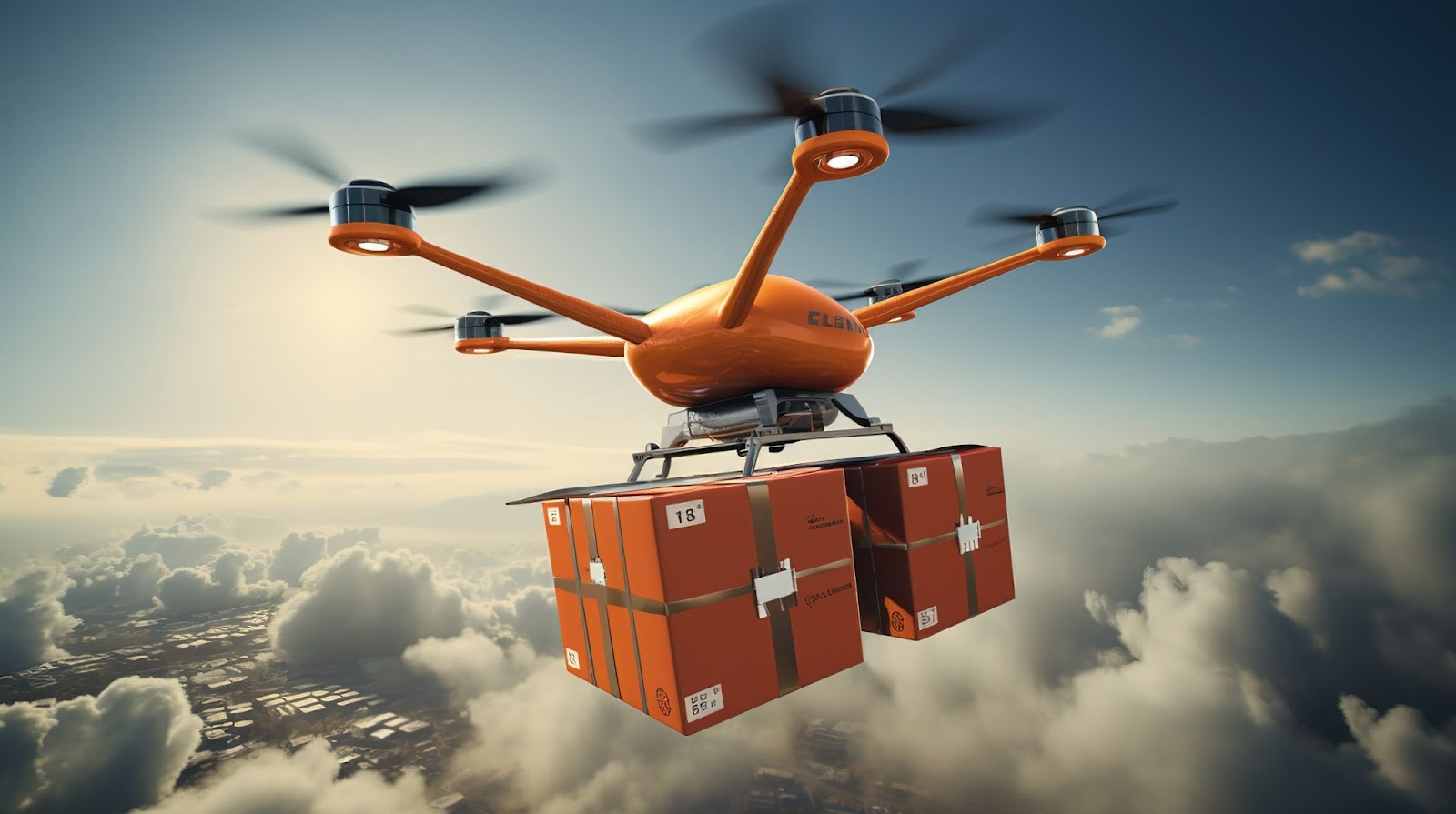
Drones are increasingly being integrated into several stages of 3PL fulfillment including:
Last-Mile Delivery
Drones are being used in B2C logistics to deliver packages directly to customers’ homes or designated drop-off points. They often operate on pre-programmed routes, guided by GPS data and real-time communication with ground control systems. This helps them avoid obstacles, navigate complex environments, and follow the most efficient flight path.
To facilitate drone deliveries, some companies use designated landing zones, such as rooftop pads or ground-based delivery points, where drones can safely drop off packages. This is common in residential areas or business complexes, where landing space might be limited. Alternatively, they can also hover above a designated location and lower packages via tethers or release mechanisms. This method allows for safe, contactless deliveries without the drone needing to land.
Inventory Replenishment and Transfers
Drones are used within warehouses to move inventory from storage areas to fulfillment zones or replenishment points. For instance, when stock levels are low in certain picking zones, drones can transport goods from storage to replenish these areas, ensuring that products are available for order fulfillment without delay.
By integrating with warehouse management systems (WMS), drones can also automatically identify when an item needs to be replenished. This minimizes the need for human workers to manually move products.
Warehouse Management
Drones equipped with RFID readers or barcode scanners can autonomously fly through warehouse aisles to scan product barcodes and check stock levels. This greatly reduces the time and labor required for manual stock counting, allowing for real-time inventory management.
Drones can perform frequent and precise inventory checks to cut down on human error and ensure that inventory data is always up to date. This supports dynamic inventory systems where stocks can be constantly monitored without shutting down operations.
Returns and Reverse Logistics
Drones can be deployed to collect returned items from designated drop-off points. This saves time and labor compared to traditional courier pickup methods. Instead of scheduling a truck or delivery vehicle for a single pickup, drones can handle multiple returns quickly, especially in densely populated areas.
Benefits of Drones In Fulfillment Centers

Drones are simplifying 3PL fulfillment in many ways. Here are the top benefits of using a cargo drone:
- Faster Deliveries – Cargo drones reduce the time between when an order is placed and when it reaches the customer. By bypassing road traffic and taking more direct flight paths, drones are especially useful for delivering small packages in urban areas.
- Cost Savings – Since drones do not require drivers and have minimal energy needs compared to trucks or vans, they offer long-term savings on delivery expenses.
- Environmental Sustainability – Drones operate on electric power, making them a more eco-friendly option compared to conventional delivery vehicles that burn fossil fuels. This helps reduce carbon emissions and aligns with sustainability goals/
- Enhanced Supply Chain Efficiency – Beyond last-mile deliveries, drones can streamline internal logistics within warehouses and between fulfillment centers. For instance, drones can transfer goods between nearby distribution hubs or conduct inventory management tasks within large warehouses.
- Improved Accessibility – Drones can deliver to remote or hard-to-reach areas where traditional vehicles might face challenges. This makes them especially valuable for disaster relief efforts or delivering essential goods to isolated communities.
Takeaway
With cargo drones slowly getting a footing in the logistics industry, we’re coming closer to greener logistics operations by the day. With growing market adoption, businesses are poised to benefit from quicker deliveries, streamlined operations, and better access to hard-to-reach locations.
While cargo drones are mostly still in their infancy stages, their potential is promising. We can expect that they will become an integral part of modern logistics operations in the future.