
3PL Fulfillment for Towing & Cargo
Turbocharged
Scale in the fast lane with 40+ years
of proven reliability
A need for Speed? Accelerate your growth!
Fulfillment experts since 1982
Talk to a Fulfillment Specialist
Request a Quote
Fields marked * are required.
Thank you for your interest in Speed Commerce.
For urgent needs, give us a call at 866-413-3402.
A fulfillment expert will get back to you within 1-2 business days.



eCommerce
Fulfillment
B2B
Fulfillment
Call Center
Services
3PL Fulfillment for Towing & Cargo
Towing and cargo products range from compact tie-downs and hitch accessories to long bed racks, cargo carriers, ramps, and heavy towing equipment. That creates different storage, picking, packing, and shipping requirements in the same catalog. Vehicle fitment also adds another layer since similar-looking products can fit different makes, models, bed sizes, or hitch classes. A third-party logistics provider can handle receiving, inventory storage, order fulfillment, shipping, and returns when bulky products and growing SKU counts become harder to manage in-house.
Why Towing and Cargo Fulfillment Gets Complicated Fast
Towing and cargo equipment doesn’t fit neatly into one warehouse profile. Ratchet straps and hitch pins take little space, while roof racks, cargo carriers, bed extenders, and loading ramps can occupy much larger storage locations.
Weight, dimensions, fitment, finish, and included hardware also affect how each SKU should be stored and packed. A warehouse needs clear product records so similar parts don’t get mixed during picking.
Three Areas That Need Close Warehouse Control
Towing and cargo products vary in size, weight, shape, and vehicle compatibility, so warehouse handling needs to account for more than just picking and packing. These areas have the most impact on order accuracy, storage, and product protection.
Fitment and SKU Accuracy
Vehicle compatibility affects hitches, racks, bed accessories, wiring products, and other towing equipment. Clear SKU records and barcode checks help separate similar models, sizes, hitch classes, and fitment variations.
Weight and Product Shape
Towing equipment can be dense, long, awkward, or difficult to stack. Storage locations should match each product’s physical profile, with enough handling space around racks, ramps, carriers, and other irregular items.
Surface and Hardware Protection
Powder-coated racks, metal carriers, and finished towing products can get scratched or dented during handling. Packing materials should separate exposed surfaces from loose hardware, while bolts, brackets, pins, and mounting pieces need a final count before shipment.
More Value. Better Service. No Speed Bumps Ahead.
Get StartedTowing and Cargo Product Categories
Towing and cargo catalogs can contain compact hardware, long metal products, heavy equipment, and vehicle-specific accessories. Breaking the catalog into product groups helps define storage and packing requirements.
| Product Group | Examples | Warehouse Focus |
|---|---|---|
| Towing equipment | Trailer hitches, tow bars, hitch mounts | Weight, dimensions, fitment, and hardware |
| Cargo carriers | Hitch-mounted carriers, roof baskets | Irregular shape and surface protection |
| Roof and bed racks | Roof racks, bed racks, ladder racks | Long-item storage and fitment accuracy |
| Tie-down equipment | Ratchet straps, cargo nets, anchors | SKU separation and quantity checks |
| Load-control hardware | Load binders, hooks, chains | Weight and secure bin storage |
| Loading equipment | Ramps, bed extenders | Length, box strength, and handling space |
| Towing accessories | Hitch pins, locks, wiring accessories | Small-part organization and compatibility |
Clear category and fitment records help warehouse teams distinguish products that look similar but belong to different vehicle or towing configurations.
- Fitment and SKU Accuracy – Separate similar hitches, racks, bed accessories, and wiring products by model, dimensions, hitch class, and compatible vehicle.
- Weight and Product Shape – Assign long, dense, and irregular products to suitable storage and handling locations.
- Surface and Hardware Protection – Protect powder-coated and finished metal surfaces from loose bolts, brackets, pins, and other hard components.
- Packing and Shipment Measurements – Use packed dimensions and weight to determine carton strength and the appropriate carrier service.
- Returns and Resale Checks – Inspect product condition, mounting hardware, packaging, and vehicle fitment before restocking.
Shipping Profiles Across Towing and Cargo Products
Not every towing and cargo product belongs in the same shipping workflow. The packed dimensions and weight can change which shipping method fits the order.
| Shipping Profile | Typical Products | Main Consideration |
|---|---|---|
| Standard parcel | Hitch pins, locks, straps, wiring accessories | Small-item accuracy and secure packing |
| Heavy parcel | Hitch mounts, smaller carriers, hardware kits | Weight and box strength |
| Oversized parcel | Roof racks, ramps, bed extenders | Length and dimensional charges |
| Freight | Large carriers, rack systems, multiple heavy units | Pallet stability and freight handling |
Shipping rules should use the finished package measurements rather than product dimensions alone. Protective materials and overboxing can increase the shipment size.
Returns Need More Than a Quick Restock
Towing and cargo returns can involve incorrect fitment, missing mounting hardware, cosmetic damage, or opened packaging. Returned inventory should be checked thoroughly before it’s considered sellable.
Warehouse teams should confirm the SKU, product condition, included pieces, and packaging status. Vehicle-specific products also need the correct fitment record attached to the returned unit.
How Towing and Cargo Orders Move Through the Warehouse
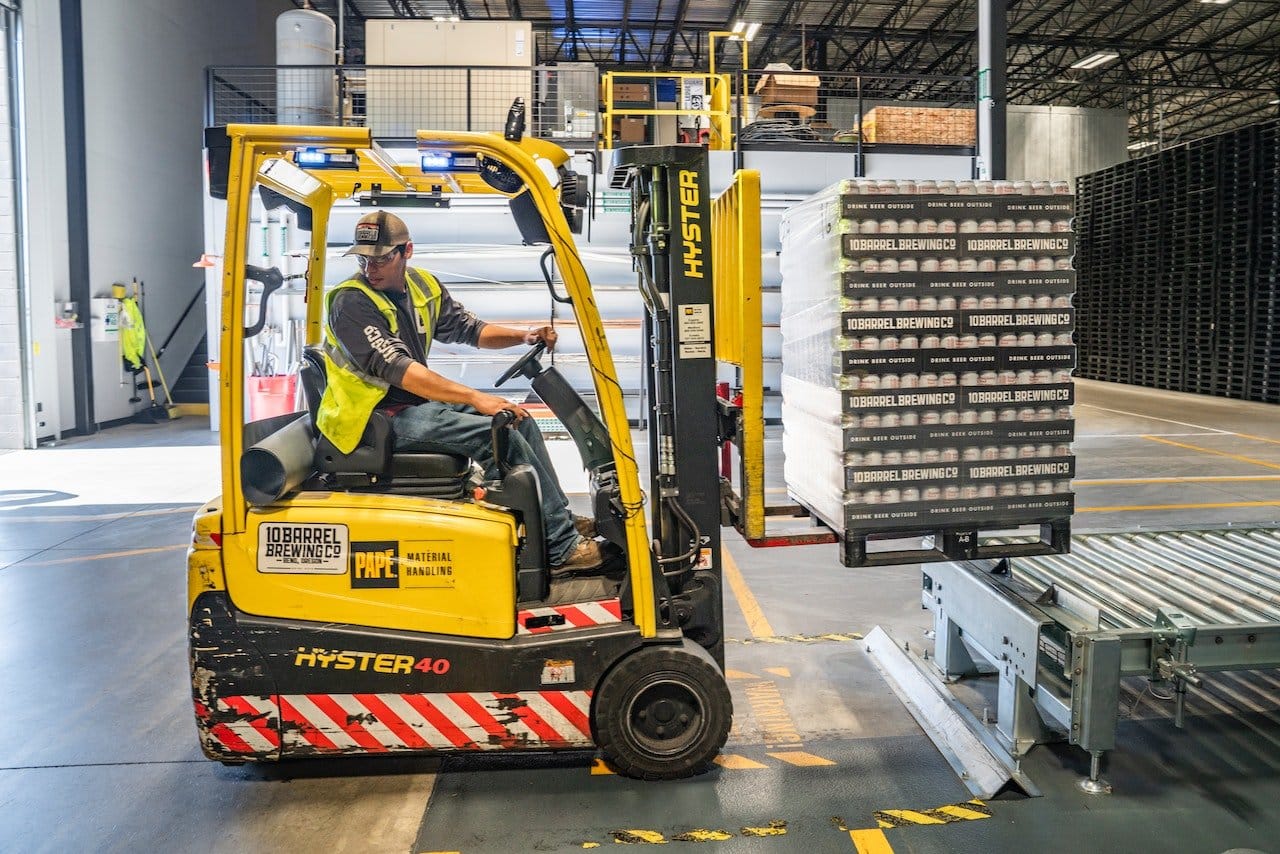
A towing and cargo order can pass through several checks before it leaves the building.
1. Receiving and Condition Checks
Incoming inventory is matched with receiving records and checked for visible box or product damage.
2. Storage by Product Profile
Products are stored according to size, weight, shape, and SKU.
3. SKU, Fitment, and Hardware Verification
Pickers verify the correct part number, fitment, quantity, and included hardware.
4. Protective Packing
Packing materials are selected according to the product’s weight and exposed surfaces.
5. Parcel and Freight Routing
The finished shipment is routed through parcel, oversized parcel, or freight based on its packed profile. This process becomes especially useful when one order combines a large product with smaller installation hardware or accessories.
When Outsourcing Starts to Make Sense
In-house fulfillment can become harder as the catalog adds heavier products, bigger or longer boxes, more vehicle-specific SKUs, and higher order volume. Storage pressure, oversized shipments, picking errors, and return inspections can also consume more staff time.
Compare receiving, storage, picking, packing, shipping, freight, and return costs against the current operation before moving inventory.
What to Ask a Towing and Cargo 3PL
A 3PL should be able to discuss the physical and operational requirements of the actual products in your catalog. Broad automotive fulfillment claims don’t tell you how a warehouse will handle a long bed rack or a heavy trailer hitch.
- How are long and irregular products stored?
- How are vehicle fitment and similar SKUs distinguished?
- How are heavy products moved through the warehouse?
- What packing methods protect metal finishes and exposed surfaces?
- How is included mounting hardware checked before shipment?
- Which products move by parcel, oversized parcel, or freight?
- How are fitment-related returns inspected before restocking?
Towing and Cargo Fulfillment With Speed Commerce
Speed Commerce handles B2C fulfillment, B2B fulfillment, warehousing, inventory management, pick and pack, returns, kitting, and freight management.
Towing and cargo sellers can discuss SKU counts, box dimensions, product weight, fitment variations, hardware requirements, and shipping profiles before inventory moves into the warehouse. Identify larger racks, carriers, ramps, and towing equipment early so you can plan storage and shipping requirements around their packed size.
Towing and cargo fulfillment raises practical questions about fitment, bulky products, shipping methods, hardware, and returns. These short answers cover several points sellers commonly review before working with a 3PL.
Q: Can a 3PL Handle Heavy Trailer Hitches and Cargo Carriers?
A: Yes, when the warehouse accepts the product’s weight and dimensions and has suitable storage and material-handling equipment. Sellers should share packed measurements before inventory arrives.
Q: How Do Warehouses Prevent Fitment Mix-Ups?
A: Clear SKU records, barcode scanning, and fitment data help separate similar products. This is especially useful for racks, hitches, bed accessories, and other vehicle-specific equipment.
Q: Can Long Products Such as Racks and Ramps Ship by Parcel?
A: Some can, depending on their packed dimensions and carrier rules. Longer or heavier shipments can fall into oversized parcel or freight categories.
Q: How Should Mounting Hardware Be Handled?
A: Hardware can be stored with the main product or tracked as part of a kit. Final quantity checks help catch missing bolts, brackets, pins, or other components before shipment.
Q: What Affects Towing and Cargo Fulfillment Costs?
A: Storage footprint, weight, box dimensions, order complexity, packing materials, shipping method, freight charges, hardware checks, and return inspection can all affect total cost.
Insights

Shopify Dropshipping vs Shopify Order Fulfillment: Which Is Right for You?
Choosing between Shopify dropshipping and Shopify order fulfillment is a major decision for your eCommerce business as it speaks to the very business model that you choose. Each approach has its advantages and potential drawbacks, and understanding which method aligns with your business goals will lead to making the right choice. Who are we? Speed…
Read More

Section 321 ‘Zero to Hero’ Cheat Sheet: Glossary, Terms, Definitions & Concepts
Updated August 25th, 2025 Put simply, Section 321 of the U.S. Tariff Act allows low-value shipments to enter the U.S. without paying duties or taxes. Originally enacted in 1938, it’s become a game-changer for eCommerce businesses seeking to minimize costs on international shipments. However, Section 321 also comes with its complexities and sparked ongoing debates…
Read More

5 Newly Launched eCommerce Tools That Can Propel Your Business
Nowadays, businesses face extremely complex logistics, marketing, and customer service challenges. To tackle this, new tools powered by artificial intelligence (AI) and automation are emerging to further assist eCommerce businesses and power their growth. These tools simplify business processes, as well as provide valuable insights and innovative ways to engage with customers. Who are we?…
Read More
Looking for a better fulfillment solution?
A fulfillment expert will get back to you within 1-2 business days.