
3PL Fulfillment for Lab Equipment
Turbocharged
Scale in the fast lane with 40+ years
of proven reliability
A need for Speed? Accelerate your growth!
Fulfillment experts since 1982
Talk to a Fulfillment Specialist
Request a Quote
Fields marked * are required.
Thank you for your interest in Speed Commerce.
For urgent needs, give us a call at 866-413-3402.
A fulfillment expert will get back to you within 1-2 business days.



eCommerce
Fulfillment
B2B
Fulfillment
Call Center
Services
3PL Fulfillment for Lab Equipment
A damaged microscope or a centrifuge missing necessary parts can make a routine shipment become a costly return. Lab equipment fulfillment needs accurate inventory records, meticulous handling, safe packaging, and order checks that account for the product and its components.
A third-party logistics (3PL) provider can handle receiving, storing, picking, packing, shipping, and returns for laboratory equipment. This is a good alternative for sellers and manufacturers. Instead of maintaining warehouse space, fulfillment staff, packing operations, and carrier relationships in-house.
Quick Summary
- Lab equipment fulfillment has providers covering receiving, storage, inventory tracking, order processing, shipping, and returns.
- Microscopes, centrifuges, analytical instruments, and lab supplies may have different packaging, handling, and storage requirements.
- Accurate SKU identification and component checks help improve order accuracy.
- Companies should verify product/item types, dimensions, and handling instructions before shipping any stock.
What Does Lab Equipment Fulfillment Cover?
Lab equipment fulfillment handles the physical transfer of items from warehouse receipt through outbound shipping and returns. Incoming inventory is then checked, recorded, and assigned to appropriate storage locations before it becomes available for orders.
When an order comes in, warehouse staff pick the required SKU and quantity. They also verify any included parts or components, pack the shipment, and prepare the order(s) for a suitable parcel or freight service. Inventory records get updated as the items move through the operation.
Product records should have a clear distinction between models, dimensions, configurations, and packaged sets. A microscope with accessories and a standalone microscope, for example, belong in separate inventory categories.
What Makes Lab Equipment Fulfillment Challenging?
Lab equipment has several practical fulfillment risks:
Fragile components
Connectors, displays, optics, and other delicate parts can be easily damaged.
Similar versions/models
Slight differences between product versions may lead to picking errors when inventory records and locations aren’t clear.
Missing parts or components
Otherwise functional products may become unusable if included attachments, parts, or accessories are missing.
Different dimensions
Small supplies and bigger benchtop instruments can’t always use the same shelving, packing materials, or shipping method.
High product value
Loss, incorrect shipment, or damage may incur significant replacement costs.
More Value. Better Service. No Speed Bumps Ahead.
Get StartedTypes of Lab Equipment Handled by 3PLs
Lab product catalogs can range from small supplies to fragile instruments and bigger benchtop equipment. Each category creates different fulfillment priorities.
| Product Category | Examples | Fulfillment Priorities |
|---|---|---|
| Microscopy equipment | Microscopes and related components | Protecting optics and other fragile parts/accesories |
| Centrifuges | Benchtop centrifuges and compatible components | Securing equipment and preventing movement |
| Laboratory consumables | Pipettes, test tubes, and similar supplies | Identifying SKUs and determining accurate quantities |
| Analytical instruments | Replacement parts and compatible attachments | Protecting sensitive components, displays, and connectors |
| Equipment accessories | Equipment packaged with multiple components | Confirming model compatibility and included pieces |
| Product kits | Equipment packaged with multiple components | Checking contents before shipment |
Verify product acceptance with the 3PL before sending inventory. Hazardous materials, chemicals, pharmaceuticals, reagents, and other regulated products may need capabilities beyond standard lab equipment fulfillment.
- Microscopy equipment – Identify optical components and accessories before picking. Keep items with vulnerable lenses and optics protected.
- Centrifuges – Check model compatibility and use packaging that restricts movement during transportation.
- Laboratory consumables – Distinguish similar supply SKUs and count the required quantities accurately.
- Analytical instruments and accessories – Separate compatible attachments and protect connectors, displays, and sensitive components.
- Product kits – Check all listed components before closing the shipment; record incomplete sets separately.
Storage and Packaging for Lab Equipment
Lab equipment needs storage and packaging practices that fit its size, weight, fragility, and component sensitivity. Matching storage locations and protective materials to each instrument helps reduce damage during the warehouse handling and transportation stages.
Storage Based on Product Requirements
Storage locations should match items’ dimensions and handling needs. Smaller parts and accessories can be stored in bins with clear labels. Larger equipment needs to have shelving or other locations that fit their weight and size.
Protective Packaging for Fragile and Precision Equipment
Packages should restrict product movement and protect vulnerable areas from impact. Some cushion sensitive components, while others protect screens or optics or secure detachable accessories so they don’t move around in their boxes.
Fulfillment Services for Lab Equipment Sellers
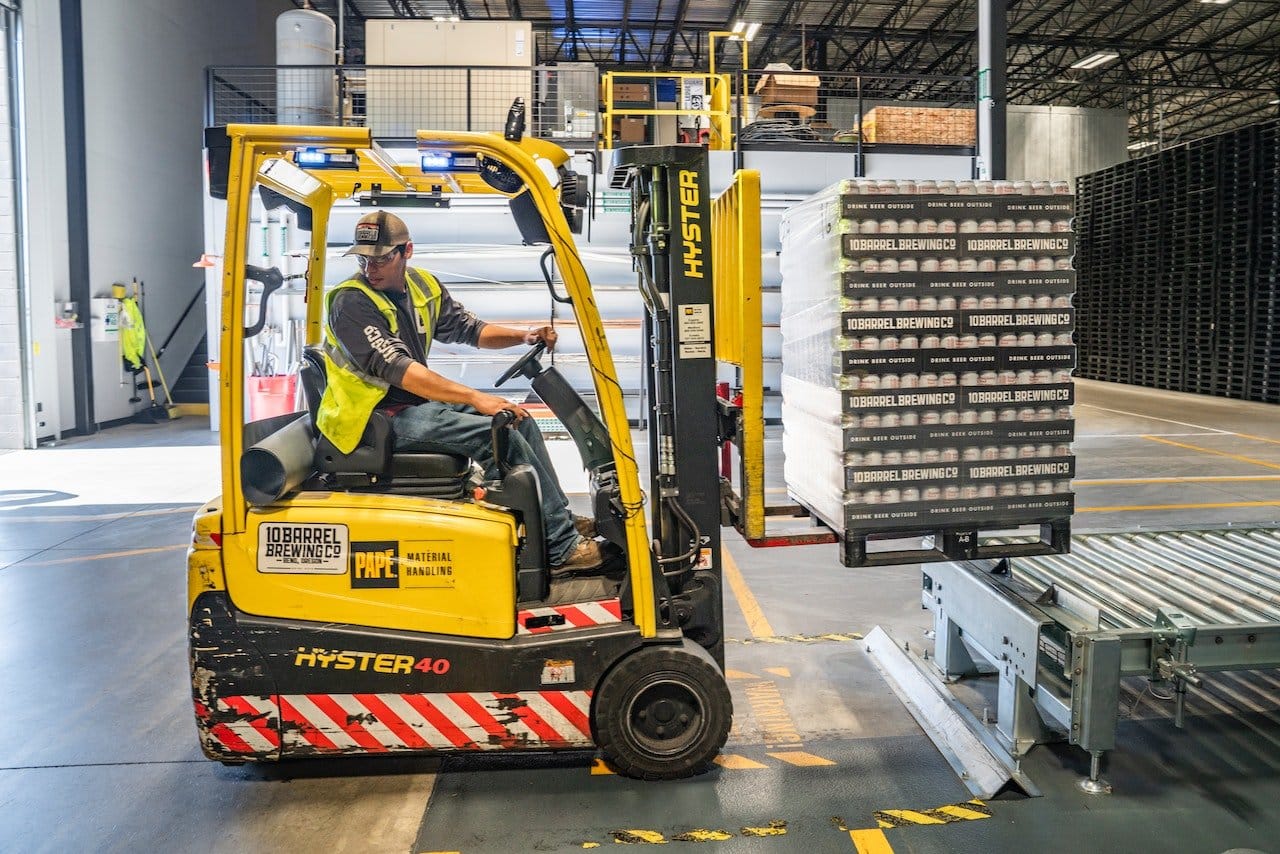
Lab equipment fulfillment is more than just moving items from storage to shipment. Each step should account for product condition, SKU accuracy, included components, packaging requirements, and order type. 3PLs can organize all these into a consistent workflow from receiving returns.
1. Receiving and Condition Checks
Receiving teams compare incoming quantities against shipment records. They also inspect outer packaging and visible product condition. Damaged boxes, missing/lost units, or other discrepancies should be documented before inventory reaches normal storage.
Products needing further review can be separated from available stock until their condition is confirmed or resolved.2. Inventory and SKU Tracking
Lab products can have similar appearances and names while having different models, sizes, configurations, and capacity. Assigned storage locations and barcode or warehouse-system records help staff identify those SKUs during the picking process.
3. Picking, Packing, and Kit Assembly
Picking teams confirm the exact SKU and required quantity. For kits or items sold with accessories, orders may also need checks for attachments, cases, cables, or other listed components/parts.
4. eCommerce and B2B Shipping
Lab equipment sellers may ship single instruments directly to customers. They may also process multi-unit orders for clinics, research facilities, schools, or other relevant organizations.
These order types may need different carton quantities, labels, documentation, pallet preparation, or transportation methods. Larger equipment may require freight instead of standard parcel services.5. Returns Inspection and Inventory Segregation
Returned items should be inspected before being returned to sellable inventory. The review may include visible condition, packaging, accessories, and missing parts/components.
Damaged, incomplete, or otherwise questionable units should be separated until the appropriate party determines whether they can be repaired, restocked, or handled through other means.When Should You Outsource Lap Equipment Fulfillment?
Outsourcing makes sense when warehouse operations are taking resources away from the rest of your business. Insufficient storage space, heightened order volume, pick-and-pack errors, or complicated B2B shipments may drive you to this decision.
Bigger equipment can also involve freight coordination and handling needs. This may be difficult to manage along with normal parcel orders.
How to Choose a Lab Equipment 3PL
Before choosing a provider, confirm that its operation fits. Ask these questions first:
- Which types of lab equipment will the warehouse approve?
- What weights and product dimensions can the facility accommodate?
- How do they store and handle fragile or higher-value products?
- How are similar models and configurations identified?
- Can staff confirm components when fulfilling bundled products or kits?
- Are there packaging options for fragile and larger equipment?
- Can the provider support both freight and parcel shipments?
- How does the provider inspect and separate returned products from sellable inventory?
- Which inventory, order management, or eCommerce systems can connect with the warehouse?
- What are their steps, order cutoffs, and receiving timelines for addressing fulfillment errors?
Give sample SKUs, weights, dimensions, order profiles, dimensions, and packaging requirements during the evaluation process. This will give the 3PL enough details to review the operation before inventory arrives.
Choose Speed Commerce for Your Lab Equipment 3PL Needs
Speed Commerce has warehousing, inventory management, B2B fulfillment, eCommerce fulfillment, shipping, picking and packing, freight management, and returns services.
For lab equipment sellers, the fulfillment process should reflect the stored and shipped products. Order channels, product dimensions, packaging instructions, shipping methods, configurations, and accessories can affect the process.
Share your details with Speed Commerce. The team can assess your fulfillment needs and verify the right storage, packing, and shipping setup for eligible products.
Q: Can a 3PL handle fragile lab equipment?
A: Yes, it shouldn’t be a problem for providers with appropriate storage, packing procedures, and handling capabilities. Share your product weights, dimensions, manufacturer instructions, and vulnerable parts before onboarding. This way, the 3PL can confirm whether they meet the requirements.
Q: Can 3PLs ship both small lab supplies and larger equipment?
A: Providers may handle both when their warehouses and transportation capabilities can support them. Small supplies can usually move through parcel networks, while larger and heavier instruments may need palletized freight.
Q: How does a 3PL prevent missing accessories?
A: Clear SKU records and component lists help warehouse teams verify which belongs to a specific product. For bundles and kits, picking and packing checks can confirm listed accessories before closing and shipping orders.
Q: What happens when lab equipment is returned?
A: Returned equipment should be inspected for packaging condition, missing parts or components, and visible damage before returning them into sellable inventory.
Q: Can lab equipment 3PLs support institutional and direct-to-consumer orders?
A: Yes, but not all providers can do both. This is possible only if they can accommodate both order volumes, shipping methods, packing requirements, and labeling needs.
Insights

The Top 500 Canadian 3PL Companies, Categorized, Searchable & Free to Download
Search and filter 500 evidence-qualified Canadian 3PL companies by province, capability, provider type and physical-footprint evidence tier. Download the complete directory free….
Read More

The Top 1001 US 3PL Companies, Categorized, Searchable & Free to Download
We started with 3,102 candidate providers and selected the companies that demonstrated a verifiable business identity, an active website, meaningful U.S. operations and clear evidence of fulfillment, warehousing, distribution or related 3PL services. “Top 1,001” is an editorial selection versus a ranking from best to worst. Duplicates, closed businesses, foreign-only operators, software vendors and companies…
Read More

Ecommerce Fulfillment Packaging Costs (Materials, Labor, Shipping & 3PL Fees)
What ecommerce packaging really costs per order in 2026: current box and mailer prices, packing labor by the second, DIM weight and the new carrier cubic thresholds, damage, EPR fees and 3PL packaging charges….
Read More
Looking for a better fulfillment solution?
A fulfillment expert will get back to you within 1-2 business days.